
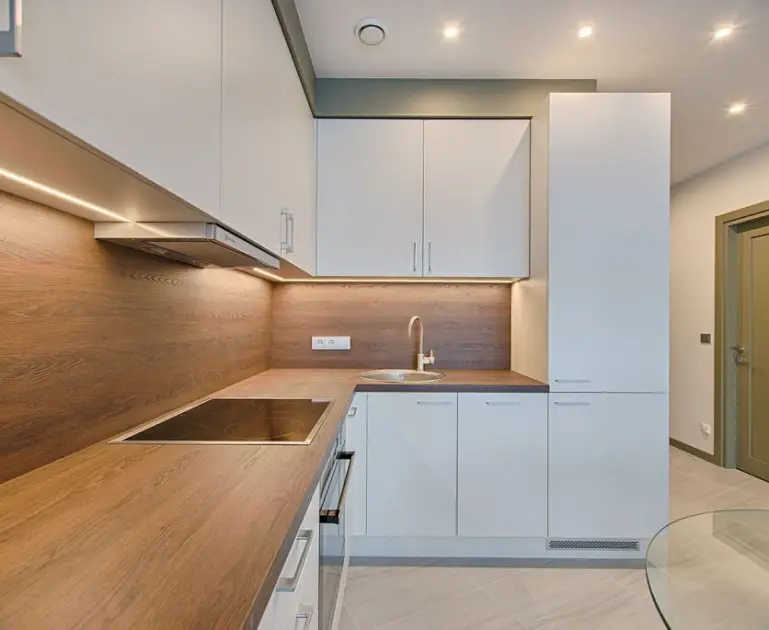
Subway Tile
Classic, versatile, affordable. Grout lines require sealing and periodic cleaning. Cost: $80-$150/m² installed.
Glass Splashbacks
Seamless, easy-clean, custom colour options. Vulnerable to impact chips. Cost: $300-$500/m² installed. Popular in modern kitchens.
Stone (Matching Benchtop)
Cohesive aesthetic, durable. Requires sealing (porous stones). Cost: $400-$700/m². Best for high-end kitchens.
Pressed Metal
Heritage character, lightweight. Not heat-suitable directly behind cooktop. Cost: $120-$250/m². Suits period renovations.
Acrylic Panels
Budget-friendly, DIY-install possible. Not heat-resistant; avoid near gas cooktops. Cost: $80-$180/m². Good for rentals.
Key Takeaways
- Glass offers seamless clean aesthetics
- Tile most versatile and repairable
- Stone provides luxury cohesion
- Pressed metal suits heritage homes
- Acrylic budget option for low-heat zones
Questions Homeowners Usually Ask Next
How much should I budget for a kitchen renovation in Melbourne?
Budget depends on layout changes, cabinetry level, benchtop choice, appliance scope and trade complexity. As a rule, fixed-layout refreshes sit much lower than structural redesigns with new services and premium finishes.
Should I keep the same kitchen layout to control cost?
Usually yes. Retaining the sink, cooktop and major service points helps contain demolition, plumbing and electrical costs. Layout changes only make sense when workflow, storage or family use will materially improve.
What kitchen upgrades usually add the most practical value?
Better drawer storage, smarter appliance placement, durable benchtops, layered task lighting and a well-sized rangehood tend to improve daily use more than cosmetic-only upgrades.
How long does a kitchen renovation usually take?
Most kitchens run over several weeks rather than a few days, especially when cabinetry manufacturing, stone templating and multiple trade visits are involved. Lead times often matter more than the demolition phase.
Use This Article With Related Reading
Connect this advice to the delivery page that matches the renovation scope.
Read adjacent guides in the same decision stage to avoid thin, one-page planning.
Pair planning content with finished renovation visuals before locking scope and finishes.
Ready to Start?
Undecided on splashback materials? Get design advice tailored to your kitchen.